
A deep learning pipeline for classifying dementia (CN/AD) from 3D MRI volumes, with explainability built in.
I didn't want a model that just spits out "AD" or "CN" and calls it a day. I wanted to know it was looking at the right thing before I trusted it. A classifier that's right for the wrong reasons isn't actually useful in a clinical-adjacent setting, even a coursework one.
3D MRI volumes get sliced into 2D, then filtered, normalized, and augmented before training.
A lightweight, ~100K-parameter CNN classifies each slice as CN or AD.
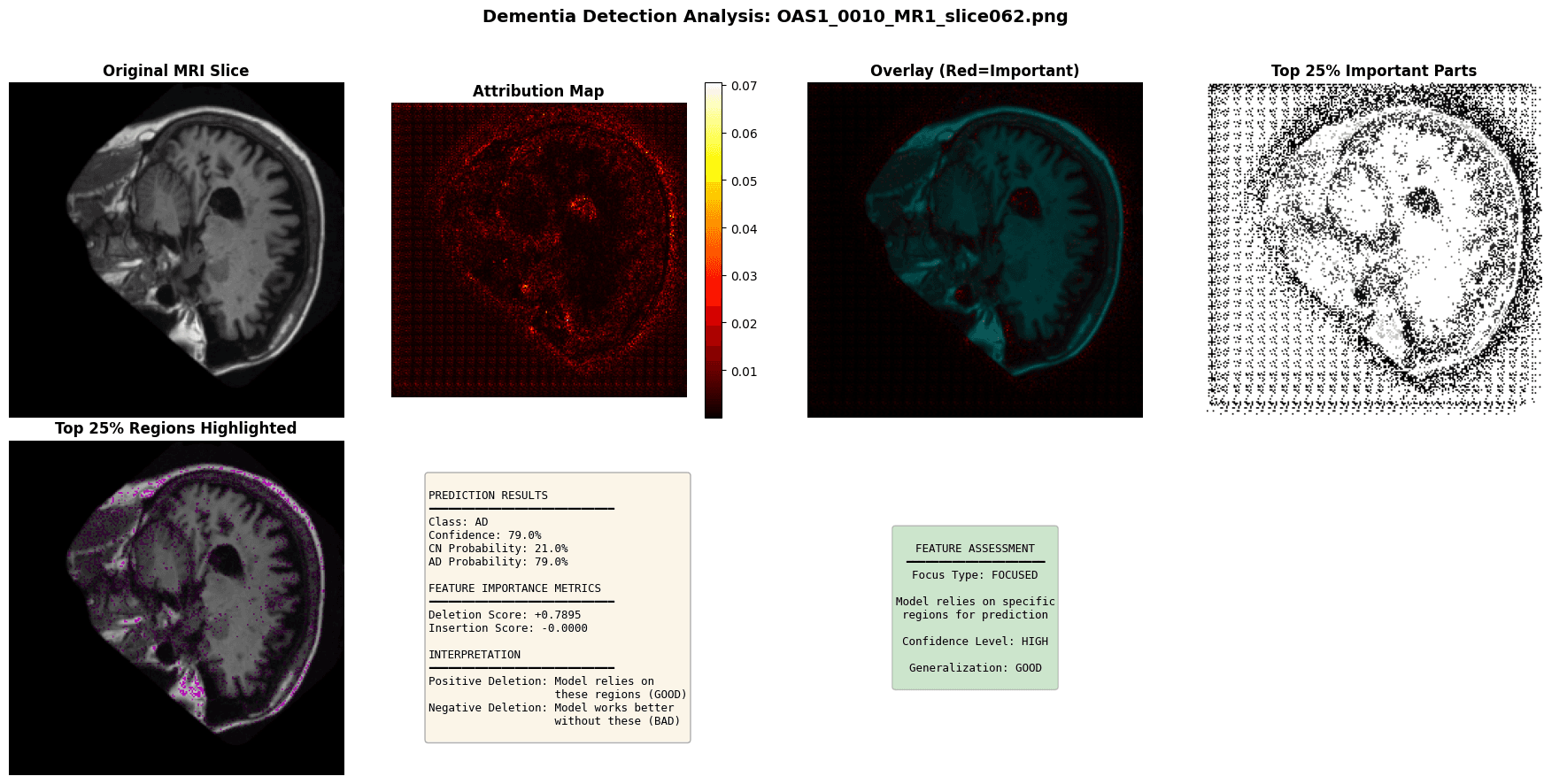
Integrated Gradients attributes every prediction back to the voxels that actually drove it.
Model Parameters
Training Epochs
Classification Task
Developed a pipeline to convert 3D MRI volumes into 2D slices, performing filtering, normalization, and augmentation for CN/AD classification.
Built a custom lightweight CNN (~100K parameters) with batch normalization, dropout, and He initialization for robust binary classification on imbalanced datasets.
Integrated Explainable AI (Integrated Gradients) to visualize predictions, compute deletion/insertion metrics, and interpret key brain regions influencing model decisions.
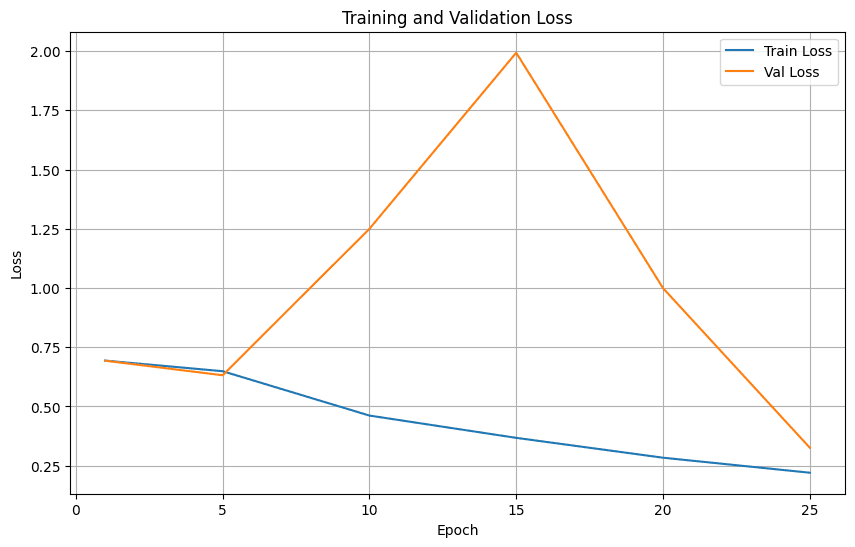
Designed a reproducible end-to-end training workflow with early stopping, learning rate scheduling, gradient clipping, and result visualization for model evaluation and improvement.